

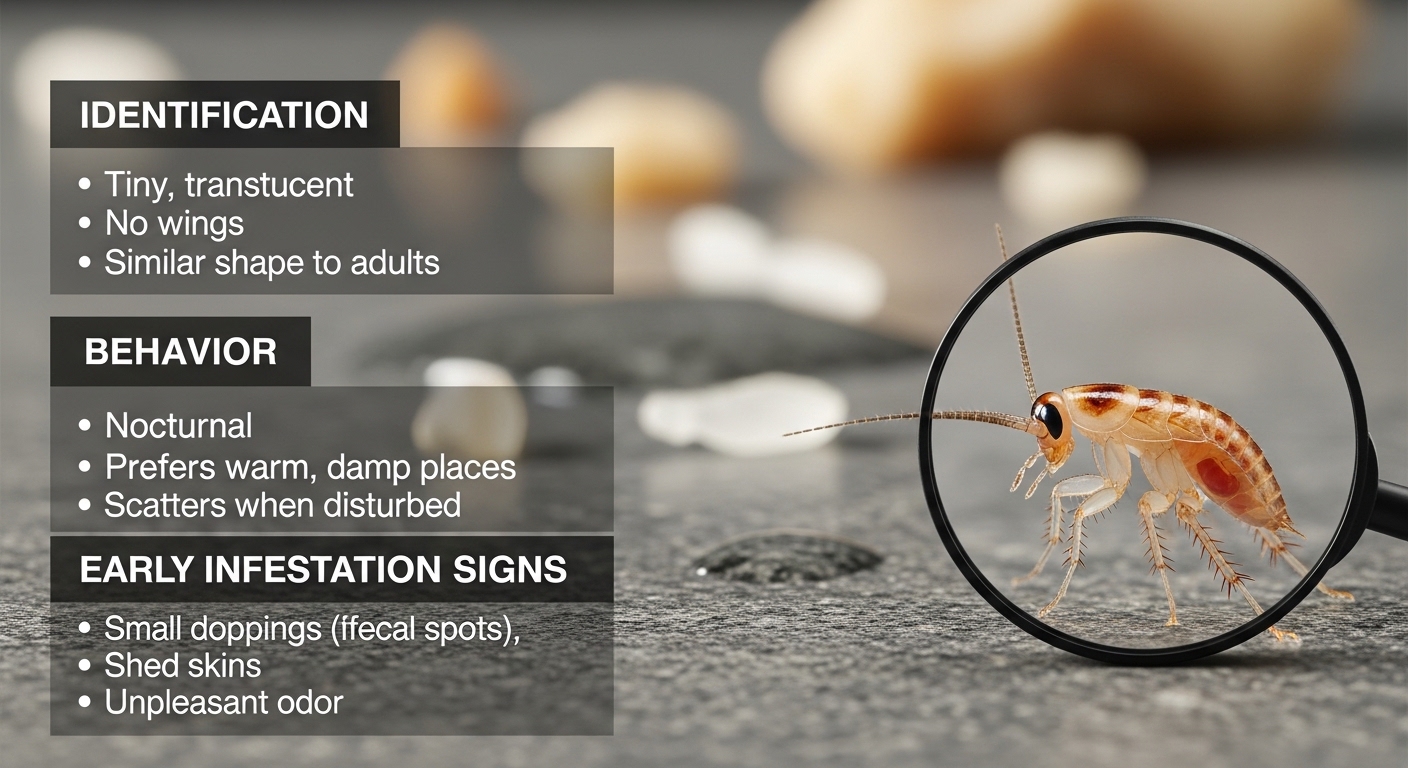
A baby cockroach is often the first visible sign that a larger pest problem is developing nearby. Many people mistake these tiny insects for ants or beetles, allowing infestations to grow unnoticed. Understanding what a baby cockroach looks like, how it behaves, and why it appears indoors is essential for maintaining a clean and healthy living space. These young roaches may be small, but their presence usually indicates active breeding and hidden nests. By learning more about their early life stages, habits, and risks, homeowners and property managers can recognize warning signs sooner and respond before the situation becomes difficult to control.
What Is a Baby Cockroach
A baby cockroach, also known as a nymph, is the immature stage of a cockroach that has recently hatched from an egg case. Unlike many insects, cockroaches do not undergo complete metamorphosis, so the baby cockroach already resembles an adult but in a much smaller and lighter-colored form. These nymphs lack wings and are softer in appearance, making them harder to identify at first glance. Depending on the species, a baby cockroach can be just a few millimeters long, which allows it to hide in extremely narrow cracks and crevices. Their small size helps them survive unnoticed while they grow and molt multiple times before reaching adulthood. Seeing even one baby cockroach indoors often suggests that more are hidden nearby.
Life Cycle and Development Stages
The life cycle of a baby cockroach begins when eggs hatch from a protective casing called an ootheca. Each ootheca can contain many eggs, which means multiple baby cockroaches may emerge at once. After hatching, the nymph goes through several growth stages, shedding its outer skin as it grows larger. This process can take weeks or months depending on environmental conditions such as temperature, food availability, and moisture. During this period, the baby cockroach feeds frequently to support rapid development. Because they mature gradually rather than transforming suddenly, their presence often goes unnoticed until the population increases. Understanding this life cycle is important because early intervention during the nymph stage is far more effective than dealing with fully grown roaches later.
Appearance and Behavior of Baby Cockroaches
A baby cockroach typically appears pale or light brown shortly after hatching, darkening as it matures through successive molts. Its body is flat and oval-shaped, allowing it to squeeze into tight spaces with ease. Baby cockroaches are highly active, especially at night, and they move quickly when exposed to light. They rely heavily on hiding to avoid predators and human detection, spending most of their time behind appliances, inside wall gaps, or under sinks. Despite their small size, they feed on the same materials as adults, including food crumbs, grease, paper, and organic waste. Their behavior is driven by survival, warmth, and access to moisture, which explains why kitchens and bathrooms are common locations to spot them.
Common Places Where Baby Cockroaches Hide
Because a baby cockroach is extremely small, it can hide in areas that adult roaches cannot access easily. Common hiding spots include cabinet joints, drawer corners, electrical outlets, and the undersides of appliances. They are especially drawn to warm and humid environments, making kitchens, laundry rooms, and bathrooms ideal shelters. Cracks in walls, loose tiles, and even folded cardboard provide suitable nesting areas. These hiding places allow baby cockroaches to stay protected while they grow and feed. Their ability to remain concealed for long periods makes infestations difficult to detect early. Regular cleaning and sealing of entry points can help reduce the chances of providing safe spaces for these young pests to thrive indoors.
Health and Hygiene Concerns
Although a baby cockroach may seem harmless due to its size, it poses the same health risks as an adult. These insects can contaminate food and surfaces by carrying bacteria picked up from drains, trash, and other unsanitary areas. Their shed skins and droppings may also contribute to allergic reactions and respiratory issues, especially in children and sensitive individuals. The presence of baby cockroaches often indicates a growing population, which increases the risk of widespread contamination. Because they move freely between hidden areas and food preparation surfaces, they can compromise hygiene without being easily noticed. Addressing the issue early helps protect indoor environments from potential health problems linked to cockroach activity.
Conclusion
A baby cockroach is more than just a small insect wandering across the floor; it is a strong indicator of an active and developing infestation. By understanding what a baby cockroach is, how it grows, where it hides, and the risks it carries, individuals can take informed steps to maintain a cleaner and safer space. Early awareness and prompt action are key to preventing these pests from multiplying and becoming a long-term problem.