

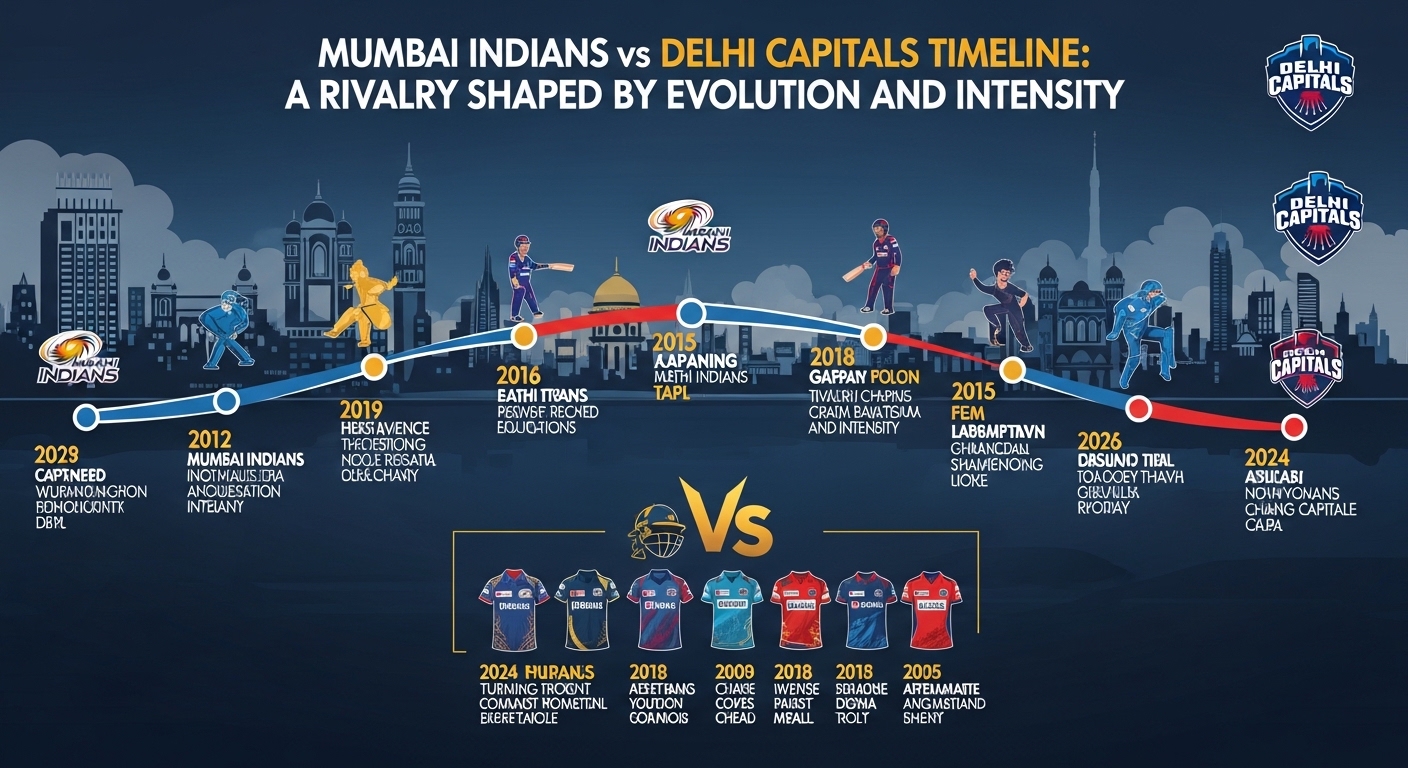
The Mumbai Indians vs Delhi Capitals timeline reflects one of the most compelling rivalries in the Indian Premier League, marked by changing fortunes, iconic players, and shifting team identities. From early seasons where one side dominated to later years defined by fierce competition, this matchup has evolved alongside the league itself. Both franchises represent major cricketing centers, bringing passionate fan bases and high expectations to every encounter. As the IPL grew into a global tournament, matches between Mumbai and Delhi became more than regular fixtures, often influencing playoff positions and title ambitions. Understanding this timeline offers valuable insight into how consistency, leadership, and smart team building shape long-term success in professional cricket.
Early Encounters and Foundation Years
In the initial seasons of the IPL, the Mumbai Indians vs Delhi Capitals timeline leaned heavily in Mumbai’s favor. Mumbai Indians, backed by strong leadership and a balanced squad, often outperformed a Delhi side that struggled to find consistency. Delhi, then competing under a different team identity, showed flashes of brilliance but lacked stability in key moments. These early matches established Mumbai as a formidable opponent, known for handling pressure and closing games effectively. For Delhi, this period became a learning phase, highlighting gaps in strategy and squad depth. Although victories were limited, these encounters laid the groundwork for a rivalry that would later gain intensity as Delhi began restructuring its approach to the competition.
The Rise of Mumbai Indians as a Dominant Force
As the IPL matured, the Mumbai Indians vs Delhi Capitals timeline entered a phase defined by Mumbai’s dominance. Mumbai Indians emerged as one of the most successful franchises in league history, driven by strong leadership, effective scouting, and a clear long-term vision. Against Delhi, Mumbai frequently showcased their depth in both batting and bowling, often controlling matches from start to finish. These seasons reinforced Mumbai’s reputation for thriving in high-pressure situations. Delhi, meanwhile, continued to experiment with combinations, occasionally challenging Mumbai but struggling to maintain momentum across seasons. This imbalance added tension to the rivalry, as Delhi sought ways to break Mumbai’s hold over the matchup.
Delhi Capitals’ Transformation and New Identity
A significant turning point in the Mumbai Indians vs Delhi Capitals timeline came when Delhi rebranded and committed to building a young, dynamic squad. This transformation brought renewed energy and competitiveness to their matches against Mumbai. Emerging talents, combined with experienced leadership, allowed Delhi Capitals to challenge Mumbai more consistently. Matches during this phase were marked by closer finishes and strategic battles, reflecting Delhi’s improved planning and execution. Wins against Mumbai became symbolic of Delhi’s growth as a serious contender. This period reshaped the rivalry, shifting it from predictable outcomes to evenly contested encounters that captured fan interest and raised expectations on both sides.
High-Stakes Matches and Playoff Clashes
The rivalry reached new heights when Mumbai Indians and Delhi Capitals met in high-stakes playoff matches. In the Mumbai Indians vs Delhi Capitals timeline, these encounters carried added pressure, as championship ambitions were on the line. Mumbai’s experience in knockout games often gave them an edge, while Delhi’s younger squad gained valuable exposure to elite competition. These matches highlighted differences in temperament, with Mumbai excelling in execution and Delhi learning to handle decisive moments. The playoff clashes intensified the rivalry, creating memorable moments that remain part of IPL history. Each meeting added another layer to the competitive narrative between the two teams.
Recent Seasons and a Balanced Contest
In recent seasons, the Mumbai Indians vs Delhi Capitals timeline has reflected a more balanced contest. Delhi Capitals have continued to mature, while Mumbai have faced phases of transition within their squad. Matches now tend to be closely fought, with momentum shifting frequently between the teams. Tactical decisions, player form, and adaptability play crucial roles in determining outcomes. This balance has enhanced the rivalry’s appeal, as fans anticipate competitive cricket rather than predictable results. Both teams enter each matchup aware of the other’s strengths, making preparation and execution more important than ever.
Conclusion
The Mumbai Indians vs Delhi Capitals timeline tells a story of growth, dominance, and eventual balance. What began as a one-sided rivalry evolved into a fiercely contested battle shaped by strategic evolution and player development. Each phase added depth and meaning to their encounters, reflecting broader changes within the IPL itself. As both teams continue to evolve, this rivalry remains a key highlight of the league, offering fans high-quality cricket and memorable moments season after season.